“I have always tried to play my best, to show the music in the way it is meant to be heard.”
Arthur Rubinstein
Reading music is like cracking a secret code – it’s your access pass to communicating directly with the spirit of the music. In this chapter, we’ll see how to unravel the written word of music – the staff, the clefs and the different values of notes that animate every composition. Through engaging stories and interactive exercises, you’ll learn to read music with confidence and curiosity.
The Music Staff: Your Canvas of Sound
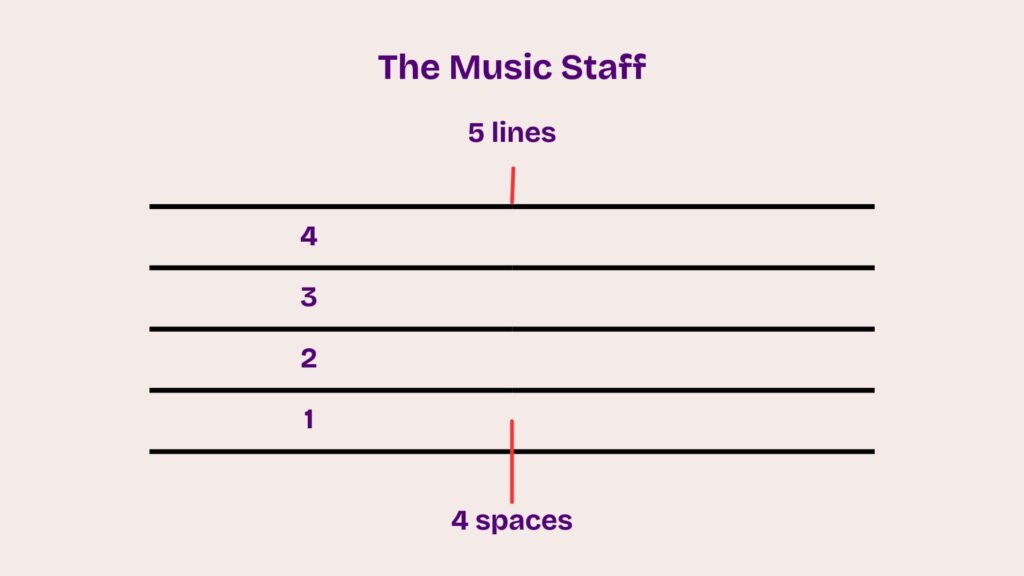
Imagine a blank canvas waiting to be filled with colors. The music staff is similar to that canvas – five horizontal lines and four spaces that holds the notes. Positions on the staff represent specific pitches. As you come to understand this configuration better, you will see patterns that guide your interpretation of any piece of music.
The first time I really saw a music staff; I remember pure excitement. It felt like a hidden message that was desperately waiting for me to decipher its secrets – a secret that, just like knowing the code, revealed the beauty of every single tune.
Decoding Clefs: Treble and Bass
The Treble Clef
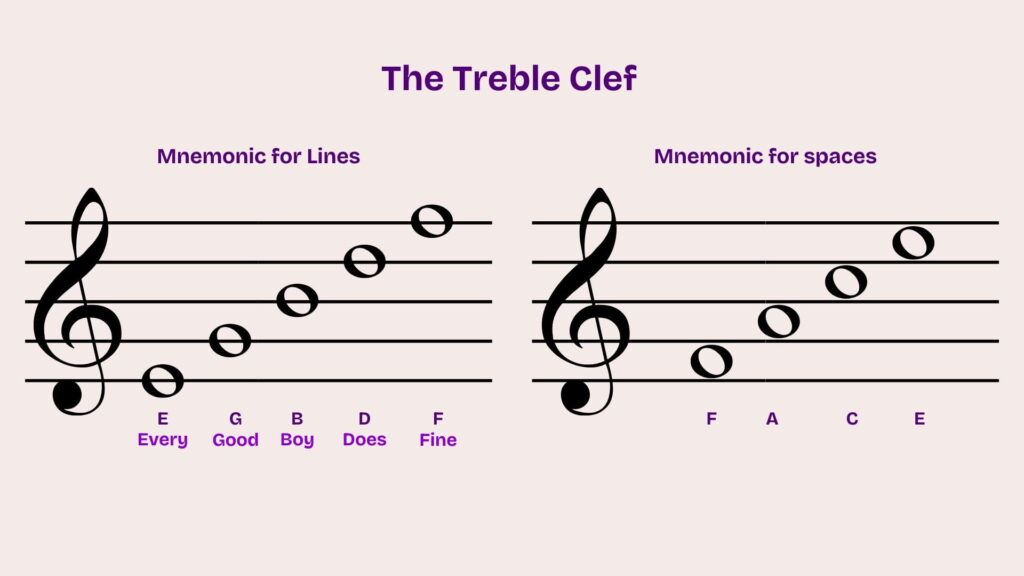
The treble clef, often called the G clef, curls around the second line of the staff. This clef is used for higher-pitched notes, commonly played with the right hand.
- Mnemonic for Lines: E, G, B, D, F (Imagine “Every Good Boy Does Fine”)
- Mnemonic for Spaces: F, A, C, E (spelling “FACE”)
The Bass Clef
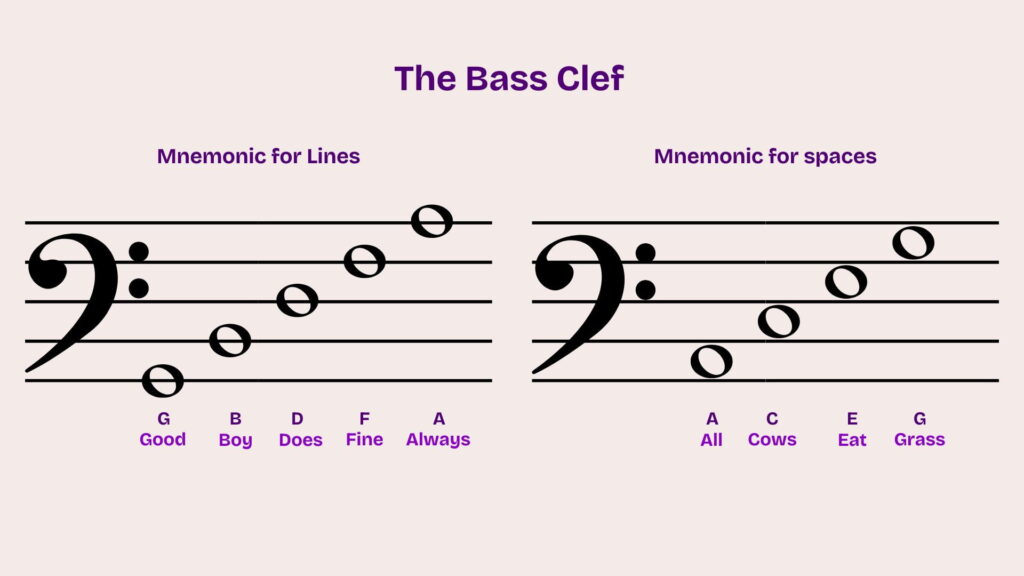
The bass clef, known as the F clef, anchors itself around the fourth line of the staff and is used for lower-pitched notes, usually played with the left hand.
- Mnemonic for Lines: G, B, D, F, A (“Good Boys Does Fine Always”)
- Mnemonic for Spaces: A, C, E, G (“All Cows Eat Grass”)
Interactive Exercise
- Clef Identification Drill: Print a blank staff and draw the treble and bass clefs in their correct positions. Label the lines and spaces using the mnemonics above.
- Reflection: How did knowing these mnemonics change your approach to reading music? Write a brief note in your practice journal.
Understanding Note Values
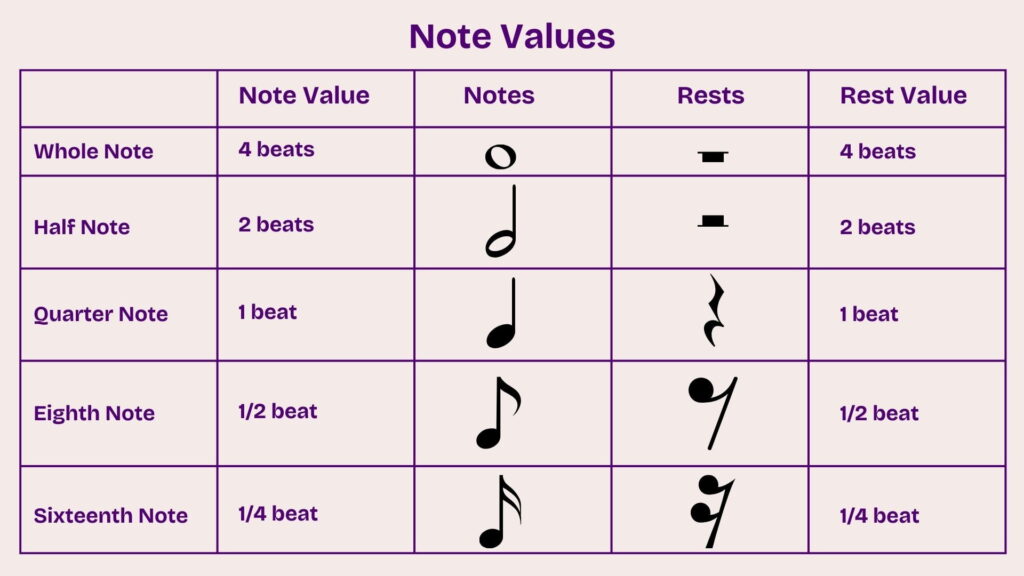
Notes are the building blocks of music. Each note has a specific duration that contributes to the rhythm of a piece:
- Whole Note: A hollow oval representing a full beat.
- Half Note: A hollow oval with a stem, lasting half the duration of a whole note.
- Quarter Note: A filled oval with a stem, the most common note duration in many pieces.
- Eighth and Sixteenth Notes: Smaller notes that divide the beat into shorter segments.
Interactive Exercise
- Note Duration Activity: Listen to a simple piece and try to tap out the rhythm using whole, half, and quarter notes. Alternatively, write down a short rhythm pattern and practice clapping it out.
- Journal: Describe how understanding note durations helped you feel the pulse of the music.
Reading a Simple Melody
Once you know where the staff, the clefs, and note values are, you can read simple melodies. Start with a brief piece that contains just one clef, and practice recognizing each note, including its time value, slowly. Over time, each of these will consolidate into a fluid language of reading music.
- Mini-Sight Reading: Find a beginner’s sight-reading exercise and do your best to play it slowly. Highlight the ones that challenge you, and go back to them in your practice journal.
- Group Activity: If you are learning with a friend or in a class, take turns reading short passages and discussing the note values and their positions on the staff.
Bring It All Together
Reading music is a must! Having mastered the staff, clefs, and note values, you have opened the door to being able to read and interpret vast amounts of music. And every time you open up a piece of sheet music, you are participating in centuries of history.
Spend 10–15 minutes each day reviewing a few measures of sheet music. Practice identifying the notes, their positions on the staff, and their durations. Over time, you’ll notice an improvement in your fluency, which will empower you to tackle more complex pieces with ease.
You’re not only learning to play the piano by embracing the language of music – you’re learning to communicate through one of the most profound forms of art. Let the staff, clefs, and notes guide your fingers as they bring melodies to life and enjoy every step of this transformative journey.
Good luck practicing and may each sheet of music drive you to create gorgeous sound!