
Alice Coltrane
Imagine the excitement of hearing your very first complete tune – a moment when the keys come together to create a melody that is both familiar and full of promise. In this chapter, you’ll learn to play simple, beloved songs such as “Hot Cross Buns” and “Mary Had a Little Lamb.” These pieces help develop your technical skills while also building confidence and joy in your playing. With the real piano notes and fun exercises, let’s explore it in more detail.
The Magic of a First Melody
Every great pianist begins with that unforgettable moment when the written notes translate into music that fills the room. I’ll never forget the thrill of being able to play “Mary Had a Little Lamb” for the first time – like the keys were speaking directly to me. These simple melodies are your introduction to the wide world of music, converting theory into sound and practice into art.
Breaking Down the Melodies
“Hot Cross Buns”
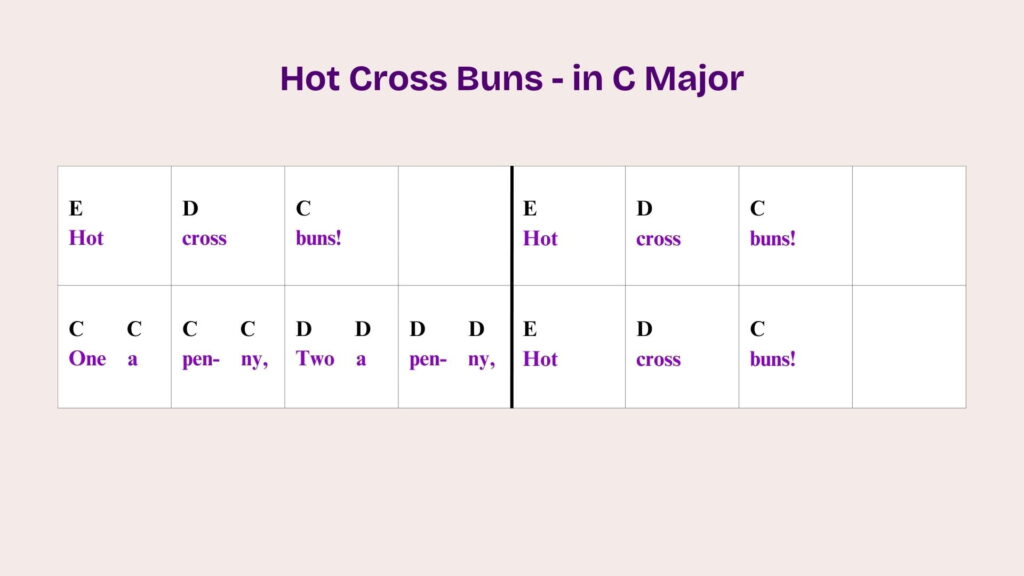
This nursery rhyme is one of the simplest tunes and a favorite for beginners. It reinforces basic note reading and rhythmic timing.
The Notes for “Hot Cross Buns” in C Major:
How to Practice:
- Step 1: Look at the sheet music and note the repetition of “E D C.”
- Step 2: Practice slowly, ensuring that you play each note clearly.
- Step 3: Gradually increase your speed while maintaining even rhythm.
“Mary Had a Little Lamb”
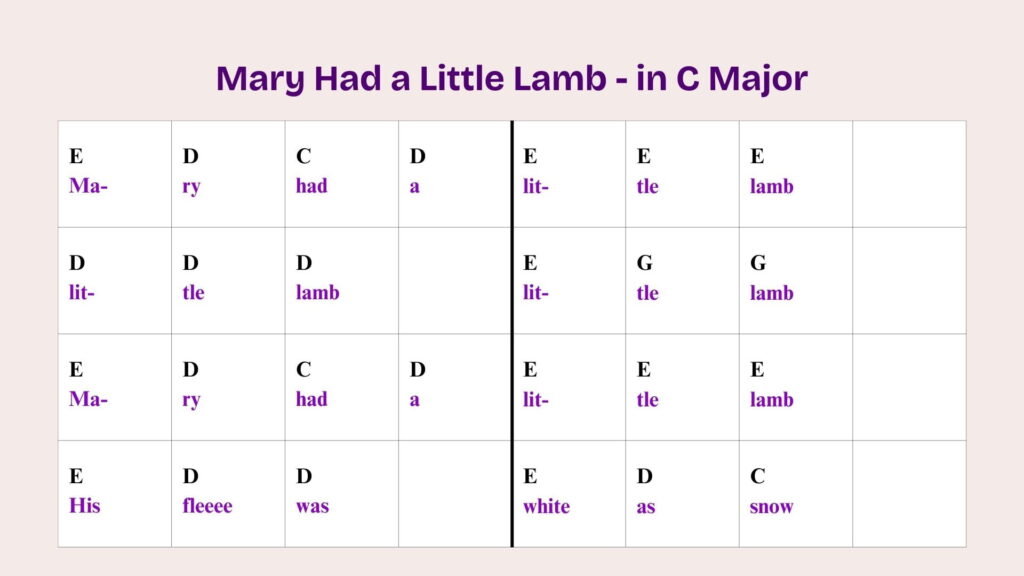
This timeless melody is a bit more varied and introduces slight rhythmic changes, making it an excellent exercise for developing fluency.
The Notes for “Mary Had a Little Lamb” in C Major:
How to Practice:
- Step 1: Identify the starting note (E) and follow the sequence carefully.
- Step 2: Play the first line slowly: “E D C D, E E E.”
- Step 3: Move on to the subsequent segments, practicing each part until you can smoothly join them together.
Interactive Exercise: Bringing Melodies to Life
Exercise 1: Learning “Hot Cross Buns”
- Step-by-Step Activity:
- Begin by playing the first line: E D C, then repeat it.
- Move on to the second line: Play four C’s followed by four D’s.
- End with the final line: E D C.
- Reflection: Record in your practice journal how the repetition of these notes helped you build confidence and improve your finger coordination.
Exercise 2: Mastering “Mary Had a Little Lamb”
- Step-by-Step Activity:
- Start with the first phrase: Play E D C D, then repeat E E E.
- Continue with the next segment: Play three D’s.
- Practice the third part: Play E followed by two G’s.
- Complete the melody with the final phrases as written.
- Reflection: Write down which part of the song challenged you the most and any tips that helped you master the transitions between phrases.
Incorporating Musical Expression
It is important to play these simple melodies accurately but don’t forget to add your own musical touch:
- Dynamics: Try playing some sections softly (piano) and some more loudly (forte) to reflect the mood of the melody.
- Tempo Variations: Start playing slowly to ensure accuracy, then gradually increase the tempo as you become more comfortable.
- Personal Flair: You can sign your personality even in simple tunes that you just learnt. A slight rubato (flexible timing) or a gentle accent on certain notes can transform the piece.
I once played “Hot Cross Buns” at a family gathering, and despite its simplicity, the varied dynamics brought smiles and nods of approval from audience. It was a beautiful reminder that even the simplest tunes have the power to move people.
Bringing It All Together
Let us recap our learning in this chapter:
- Note Identification: Learnt to read musical notes and translate them to keyboard.
- Rhythmic Accuracy: Developed a steady sense of rhythm through repeated practice of simple patterns.
- Expressive Playing: Learnt to vary dynamics and tempo to bring out the character of each melody.
Keep dedicated 15–20 minutes during your practice session to work exclusively on these simple melodies. Alternate between “Hot Cross Buns” and “Mary Had a Little Lamb” to reinforce your skills. Eventually these exercises will build your foundation for tackling more complex pieces.
Every time you play a simple melody you are not only learning notes – you are getting to know musical language. Embrace these small wins and allow them to motivate you to keep moving forward in your piano-learning adventure! Just remember that even the simplest of melody can be a catalyst for joy and a springboard for limitless musical discovery.
Happy practicing and hope every note you play find new musical worlds to explore!