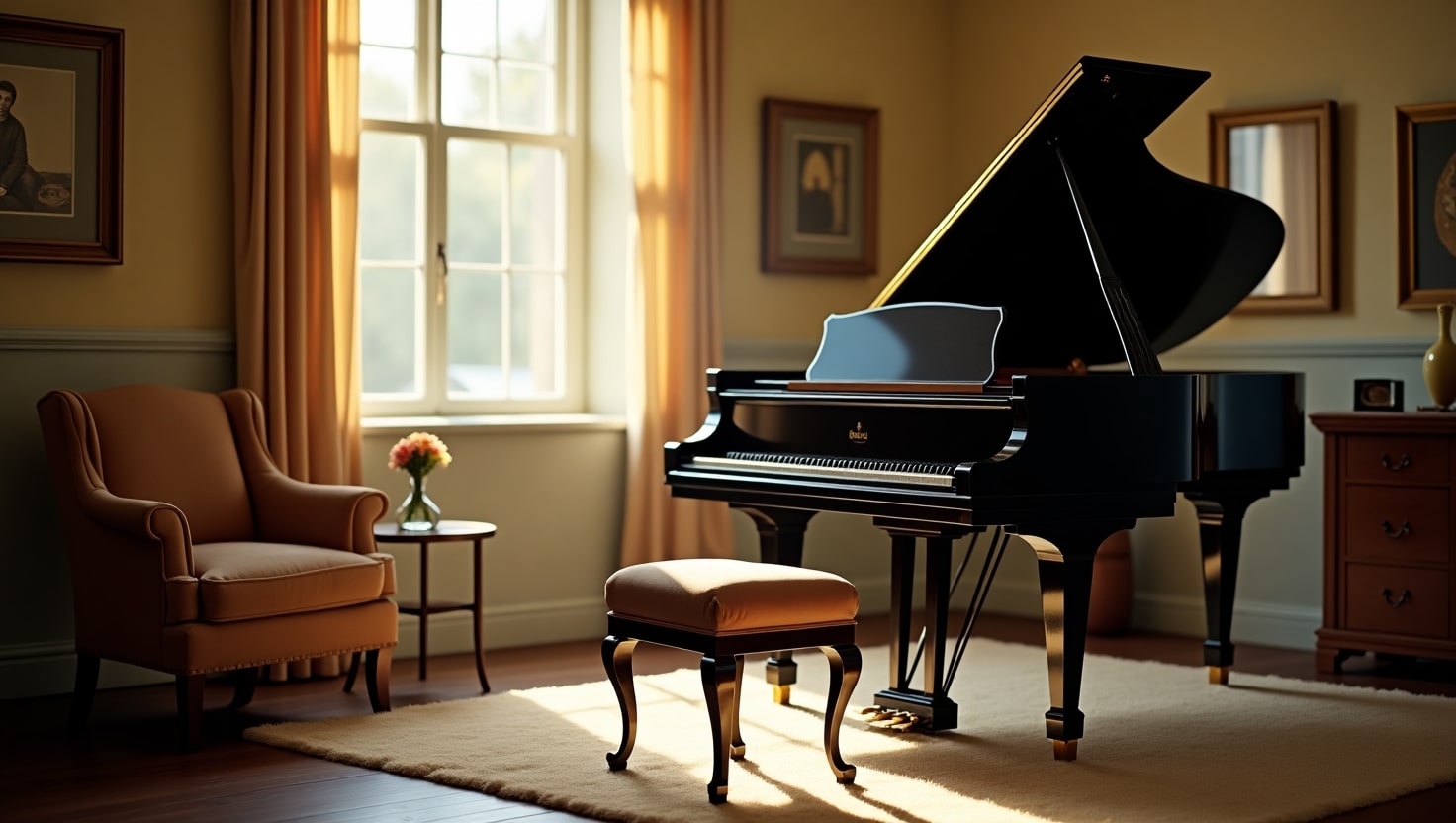
“The piano is an orchestra with 88…… things, you know”
Vladimir Horowitz
The piano is a marvel of engineering and artistry – a beautifully intricate mechanical instrument that creates music. In this chapter, we will take a closer look at how it works, the different types of pianos, and interesting facts that make each instrument special. Knowing the anatomy behind acoustic pianos and digital pianos will help you appreciate how each note is crafted to create music.
Understanding the Acoustic Piano
Key Components
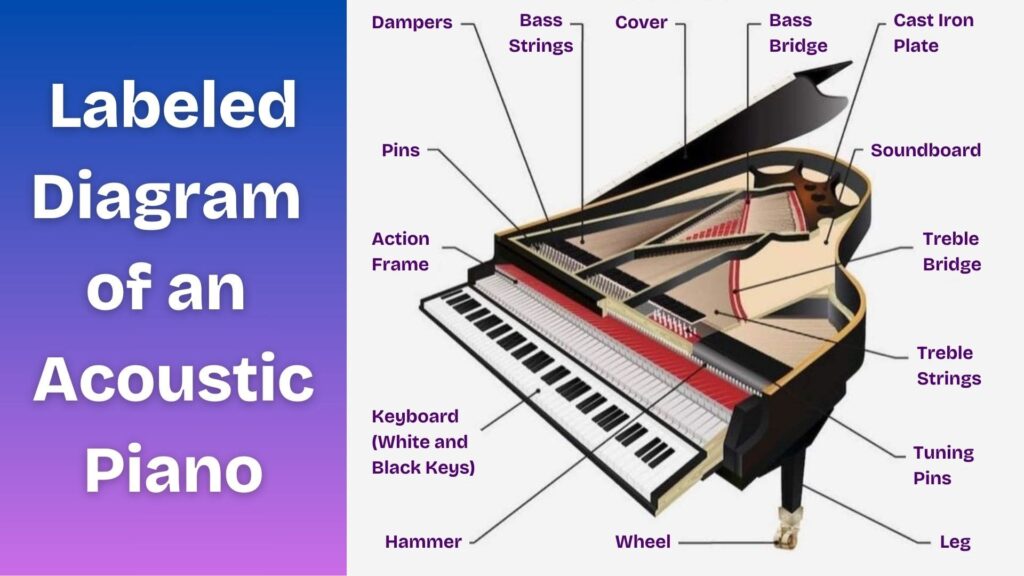
An acoustic piano is a symphony of intricate parts working together:
- Keyboard: 88 keys that make the connection between music and your ears. Now piano comes in all sorts of size 88, 76, 61, 49, 32, 25 and 17 keys.
- Action Mechanism: A complex system where each key press triggers hammers to strike strings.
- Hammers and Strings: Hammers made of a wooden core covered with felt, strike tightly stretched steel strings, creating vibrations that produce sound.
- Soundboard: Usually constructed of spruce, the soundboard helps to amplify the sound through resonance with the vibrations.
- Pedals: generally three in number, pedals modify the sound by sustaining notes or softening the tone.
Fun Facts
- An acoustic piano has more than 12,000 separate parts!
- It is said that the action mechanism is designed with such precision that it has even been compared to a finely tuned clock.
- Spruce is especially resonant, so it is used for soundboard.
Digital Pianos: The Modern Counterpart
Key Components
Digital pianos achieve the touch and sound of an acoustic piano using sophisticated technology:
- Keybed: Emulates the weighted feel of an acoustic keyboard but uses digital sensors to register your touch.
- Sound Engine: Generates realistic sound samples of acoustic pianos, typically with tweakable parameters.
- Speakers: Amplifiers integrated into the hardware for clear, punchy sound.
- Connectivity Options: The digital pianos generally include USB, MIDI, and headphone outputs, because of which, they can be used in modern lessons and recordings.
Fun Facts
- Even without strings and hammers, digital pianos can replicate the nuanced dynamics of acoustic ones.
- If this is installed as a base in your guitar, many models come with its features like recording & built in metronome making it a multi-functional practice tool.
Exploring the Inner Workings: Fun Facts & Interactive Insights
Knowing how a piano makes sound is like peek behind the curtain of a grand performance:
- The Piano Action: Each key that you press starts a rapid chain reaction – from the key to the hammer, and, ultimately, to the string, all in a fraction of a second.
- Acoustic vs. Digital: The digital pianos use digital recordings and speakers and rely on digital technology, while acoustic pianos rely on physical mechanisms to create sound. Both intend to distil the expressive nucleus of music but do so by using different means.
- Maintenance Mysteries: Acoustic pianos have to be retuned regularly, because temperature and humidity can affect their sound, while digital pianos need little maintenance.
Interactive Exercise:
Pause and have a look at your own instrument. Whether it be an acoustic or digital piano, good luck finding the following:
- The keyboard and keybed
- The pedals (if accessible)
- Any visible components of the action mechanism (or refer to your instrument’s manual for a diagram)
- Record your findings in your practice journal and note any questions you might have for further exploration.
Bringing It All Together
You should now be able to identify the main components of both acoustic and digital pianos. Also, you will be able to recognize how the construction and technology differ between the two types.
As you practice, take a moment to think about your piano anatomy. Imagine how each of these things contributes to the music you produce, and allow this deep understanding to inform how you play.
By exploring the guts of your instrument, you’re not just learning to play the piano – you’re learning to appreciate the artistry and engineering that turns music into sound. Have fun with the journey, and let your curiosity lead you to discover even more about this wonderful instrument!
Enjoy the exploration, and may your hands-on experience with the piano be as eye-opening as it is fun!