“The piano keys are black and white, but they sound like a million colors in your mind.”
Maria Cristina Mena
Now, establishing the proper posture and hand position is fundamental to whatever piano journey you go on. These techniques will improve your playing, overall tone and avoid strain and injuries so that you set yourself up for a lifetime of enjoyable practice.
Why Posture Matters
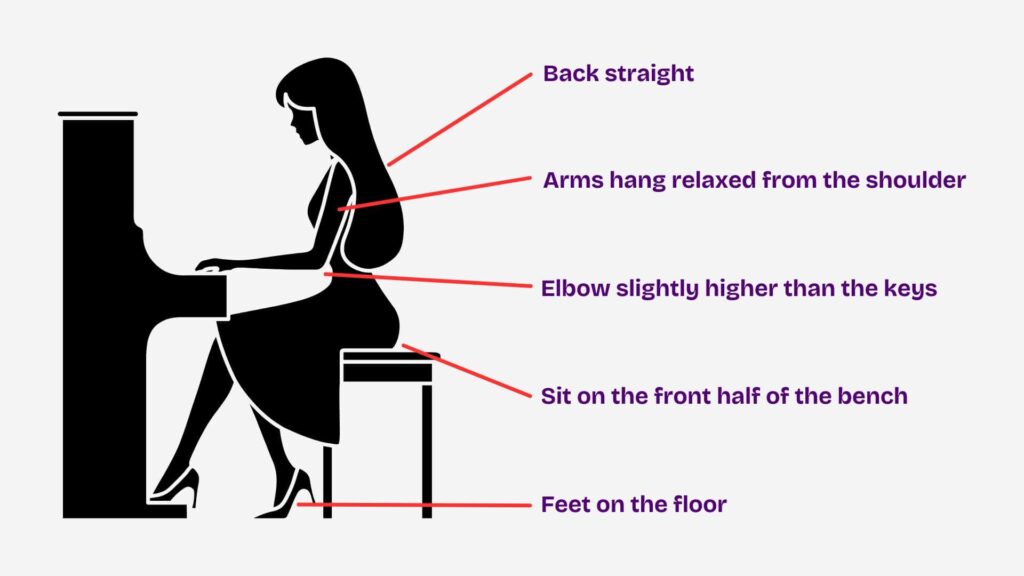
Think of the piano as your partner in a dance – your body and the instrument have to be in sync. Eventually, good posture creates a balanced base to allow you to play fluidly and expressively. Here are key elements of good posture:
- Seating Position: Sit straight with your back supported Keep your shoulders, relaxed and your feet flat on the floor.
- Bench Height: Sit low enough so your elbows are at the same level as or slightly higher than the keys, which will help you keep your arms in a natural position while playing.
- Alignment: Maintain alignment of your head, neck and spine. Do not slouch or lean too far forward, which creates tension.
I used to suffer from a lot of tension and fatigue to the point where I felt bruised all over until I learned the very support of a mindful posture. After some tweaks, I turned my practice into an easier, flow state sort of affair.
The Ideal Hand Position
Your hands, of course, tell the story of the piano. So, the right hand position allows for ease, precision, and dynamic control:
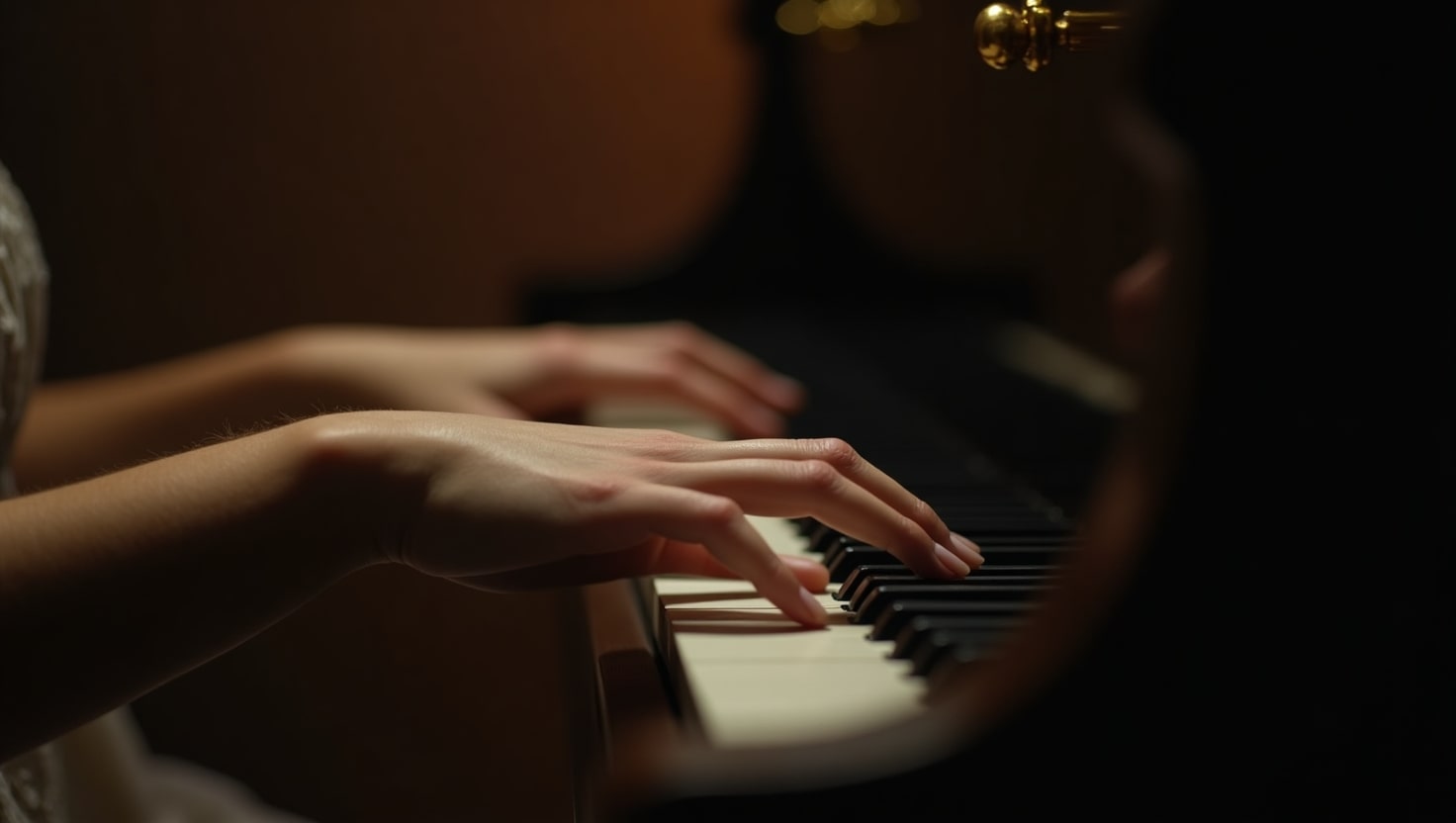
- Curved Fingers: Pretend to hold a small, delicate ball. You should have a slight curve to your fingers, with the fingers used for playing touching the keys.
- Relaxed Wrists: Your wrists should be flat and flexible – not too high or too low – to prevent stiffness.
- Natural Movement: Give your fingers freedom of movement. A loose hand fosters fluidity and agility on the keys.
Interactive Exercises for Posture and Hand Position
In order to get your posture and hand position correct, let do below exercise:
- Mirror Check: Sit at your piano in front of a mirror. Observe your posture. Is your back straight and your shoulders relaxed? You may need to adjust your bench/ seat accordingly.
- Alignment Drill: Sit with your feet on the floor and your elbows comfortably at your sides. Hold this position for a few minutes while breathing deeply.
- Curvature Exercise: This is where you lightly press down with your hands on the keys, your fingers naturally bending. Imagine holding a small bird with your fingers – taut but gentle.
- Finger Independence: Play a basic five-finger exercise (C-D-E-F-G, for example) slowly and make sure your hand maintains a relaxed, curved shape. Repeat a few times, making sure that each finger strikes with equal control on the keys.
Following these drills, write down any points of interest or challenges. Tracking your progress cultivates awareness and slowly hones your technique.
Bringing It All Together
Take a few minutes at the start of every practice to isolate posture and hand shape. These are great moments for you to be mindful, working on your technique (playing with different dynamics etc.) but also to build a strong, injury free base for your musical development.
Remember, mastering posture and hand position is not a one-time task but a continual process of self-awareness and adjustment. As you move forward, allow your progressive improvement to be a reminder of the time you dedicated through the years as well as the care that you pour into your art.
So incorporate these techniques into your practice routine every day, and watch as they become the foundation for a more expressive and fun way to play piano. When you sit down to play, focus instead on how the size of each chord shape feels in relation to the previous one, and how your hand and arm are adjusting to your progress as a pianist.
All the best with your practice, and may each keystroke reflect your dedication and enthusiasm!