
“A piano is a living, breathing thing. It can be a friend and a companion.”
Lennie Tristano
Your musical path needs a secret ingredient: a disciplined practice routine. In this chapter, we will talk about developing an effective practice schedule, how to warm up, and how to tackle difficult passages. Through step-by-step exercises and interactive elements, you will learn practice smarter, not harder.
The Foundation of Effective Practice
A well-structured practice routine enables every pianist to develop and progress. I remember starting it all – every practice was a little adventure. I discovered that 15 minutes a day, focused and intentional, could open doors to new skills and increase my confidence.
Warming Up: Setting the Stage for Success
Warming up isn’t just about preparing your body; it’s also about putting your brain in the right place. Warm up every session with a few minutes’ finger stretches and gentle scales.
Sample Warm-Up Routine:
- Finger Stretches: Spend 2 minutes gently stretching your fingers, wrists, and arms.
- Simple Scales: Play the C major and G major scales slowly, focusing on even tone and relaxed hand movements (5 minutes).
- Arpeggio Patterns: Run through broken chords or arpeggios to engage different finger patterns (3 minutes).
Breaking Down Difficult Passages
When you encounter a challenging piece, don’t be discouraged. Instead, use these strategies to make it more approachable:
Techniques to Consider:
- Isolate and Simplify: Identify the troublesome section and slow it down. Practice it separately until you build muscle memory.
- Hands Separately: Work on each hand alone before combining them. This helps you focus on accuracy.
- Use a Metronome: Start at a slower tempo than written. Gradually increase the speed as you gain confidence.
- Segmented Practice: Break the passage into smaller chunks. Master each segment before linking them together.
Creating a Consistent Practice Schedule
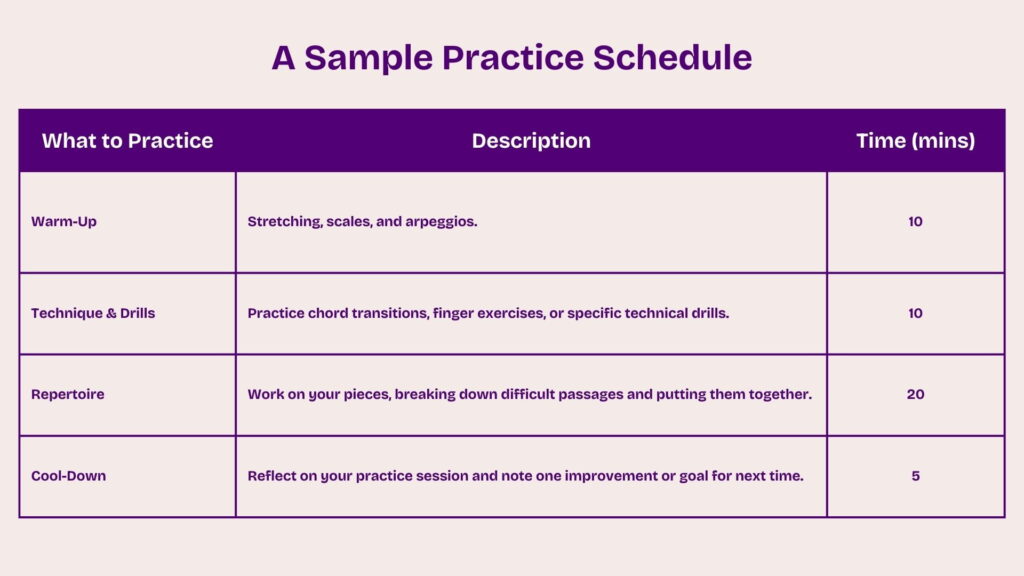
Consistency is key to steady progress. Start with a short, focused session – 15 minutes is a great beginning – and gradually increase the time as your comfort grows.
Sample Practice Schedule:
Interactive Exercise
You can customize and create your own practice schedule. List each segment of your routine and check them off after every session. Reflect in your journal on which part of your practice felt most productive and why.
Troubleshooting Common Practice Pitfalls
Even after putting together a good plan, challenges can arise. Here are some common mistakes beginners encounter and how to overcome them:
- Rushing Through Exercises: Slow, deliberate practice builds accuracy. Remember: speed comes with mastery.
- Playing With Tension: Tense hands and shoulders lead to fatigue and possible injury. Always practice in a relaxed state.
- Neglecting the Warm-Up: Skipping warm-up exercises can make your fingers stiff and limit progress.
- Lack of Reflection: Without noting what works and what doesn’t, it’s hard to track improvement. Use your practice journal to reflect regularly.
After each session, write down one challenge you faced and one strategy you used to overcome it. This will help you identify patterns and adjust your routine accordingly.
Bringing It All Together
Here are the things you have learnt in this chapter:
- Establish a Routine: Create and adhere to a consistent practice schedule.
- Warm Up Effectively: Prepare your body and mind with targeted warm-up exercises.
- Break Down Challenges: Use focused strategies to conquer difficult passages.
- Reflect and Adjust: Maintain your practice journal to troubleshoot issues and celebrate improvements.
Each practice is a step along the road to your musical excellence. Trust the process even when it is a struggle, and each hour you spend at the keys is getting you one step closer to your dreams. With some discipline, reflection and maybe a bit of creativity, your practicing will become a very useful tool for your growth.
Best of luck with your practice, and may your practice routine open doors to endless music making possibilities every single day!