
Kenneth R. Miller
The process of learning how to play the piano is more than just mastering an instrument; it’s about discovering you, agility of the mind and creativity. In this chapter, we will discuss the many benefits of learning piano, share some personal stories, and guide you through an exercise to prepare you for your musical journey.
The Transformative Power of Piano
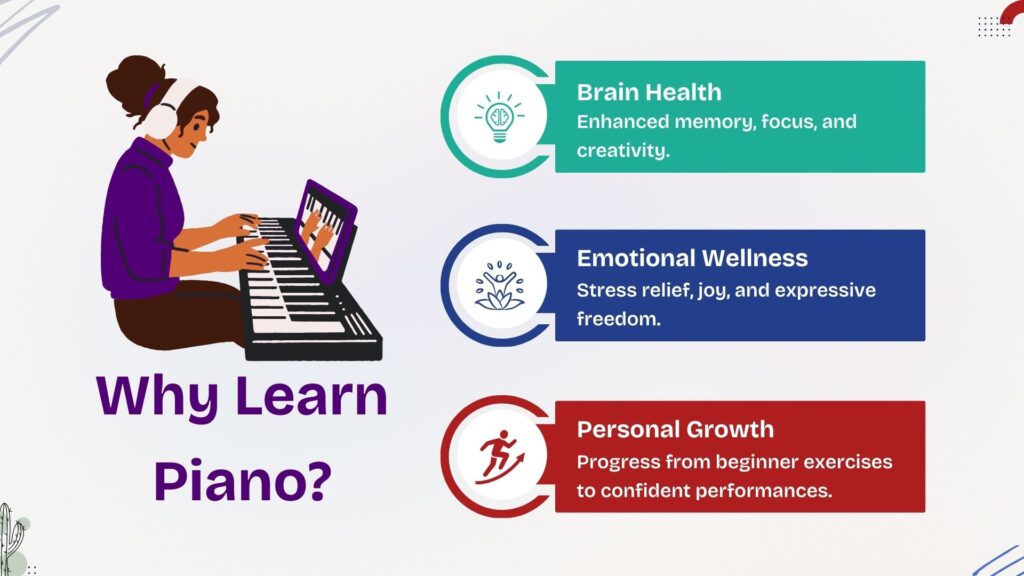
You’re sitting down at a piano, and you are about to give yourself access to some infinite options. Over the years I have seen how piano playing not only stimulates the brain but also nourishes the soul. Here some of the major benefits:
- Cognitive Development:
Piano lessons also exercise memory, concentration, and problem solving. In addition, sight-reading and hand coordination development increases brain connectivity leading to improved overall cognitive function. - Emotional Expression:
The piano is a strong means to release feelings. Whether you’re expressing joy or sorrow, enthusiasm or excitement, the keys are a way of turning the feelings inside you into something lovely that you can share with the world. - Creative Growth:
A chance to explore melody, harmony and rhythm during every practice session. Going outside the lines artistically can build your confidence and inspire you to explore possibilities in other aspects of life as well. - Stress Relief:
In a similar vein, immersing oneself in music can be a meditative departure from the life stresses of day-to-day activities. For many pianists, playing provides a calm space for reflection and relaxation.
I remember the first time I learned how a simple song could change my mood on a bad day. I sat at the piano and began to play, my fingers wandering over smooth keys, and with every note, a little steel knot of tension released. But there’s more to this experience – the piano is more than a tool for art, it’s also a sanctuary for the soul.
Personal Goal-Setting Exercise
Take a few minutes to make some goals for yourself before you continue with piano. This exercise aims to help you think about what you want and how playing the piano will enhance your life.
Step 1: Reflect on Your Motivations
Ask yourself:
- What inspired you to select the piano?
- Are you looking for a new hobby, means to express your emotions, or want a tool that will make you more mentally agile?
Step 2: Visualize Your Future
Visualize where you’d like to be a few months of practice from now:
- Can you see yourself confidently playing a simple tune?
- How do you think you can make music part of your daily routine?
Step 3: Write Down Your Goals
Create a short list of 3–5 goals. For example:
- “I want to learn to play ‘Twinkle, Twinkle, Little Star’ flawlessly.”
- “I aim to practice for at least 15 minutes every day.”
- “I hope to explore improvisation by the end of this month.”
Keep these goals in your journal and revisit them regularly. Adjust them as you grow and evolve as a pianist.
Bringing It All Together
In this chapter, we’ve discovered the fundamental and soul-altering reasons for learning the piano. The benefits gained from this instrument encompass a wide range, including cognitive flexibility, emotional expression, creative exploration, and stress relief, making it a practice that can lead to overall personal growth. We wish you all of the success possible in this endeavor, and by establishing clear goals and practicing affirmation from these well-known global musicians, you hopefully set a solid groundwork for a lifelong journey.
Think about your personal motivation and write down your goals. Keep in mind that each note is a step closer to being who you want to be – richer and more vibrant.
Hope you enjoy your practice, and that your pathway with the piano is simultaneously challenging and rewarding!